

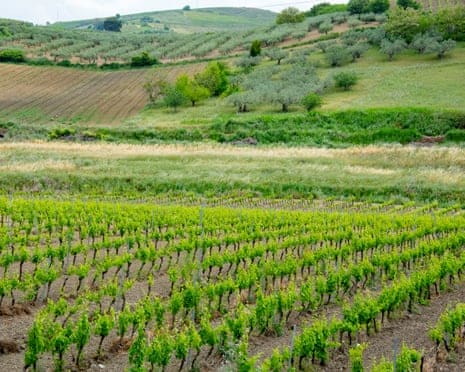
It is often the key secret ingredient in a lot of white wines, but the unsung hero of Sicily’s vineyards is taking its place in the sun Depending on where you buy and drink wine, catarratto will be very familiar or very obscure. There was a time in the 2010s when I’d have put good money on it being the house white in half of Hackney’s restaurants, and if you’ve ever picked up a sub-£15 natural white wine at an independent bottle shop, catarratto will probably have featured. If, however, you buy wine from bigger retailers and have a taste for fruity, sun-soaked whites, chances are you’ve been drinking catarratto without even knowing it. This is bonkers, given its prevalence. Catarratto is Sicily’s most widely planted white grape, accounting for roughly a third of the island’s vineyards; and, after sangiovese, it’s the second most planted grape in all of Italy. For decades, though, it was either destined for bulk wine, disappearing into tanks of anonymous, juicy table wines, or for use as a component of better-known Sicilian denominations such as fortified marsala or Etna bianco, where it plays a supporting role to other indigenous Sicilian grapes, such as grillo or carricante, respectively. It has about it a bit of a Quincy Jones quality: integral to the success of others before being recognised in its own right. Which it now really is, as modern producers make more complex catarrattos that really express their terroirs, be that volcanic, maritime or the rolling hills around Alcamo in the Sicilian north-west. Continue reading…
0 Comments